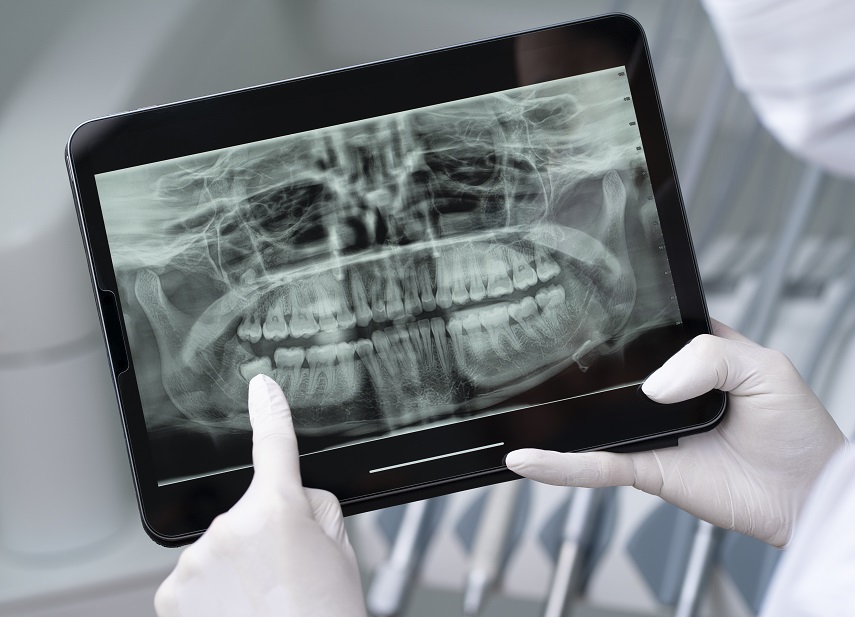
Digital dental X-rays: when they are needed and what they detect in your mouth
Digital dental X-rays are a key diagnostic tool for identifying problems that cannot be seen during a regular dental examination. They allow dentists to detect infections, evaluate bone structure, plan treatments, and prevent complications before serious symptoms appear.
Thanks to digital technology, it is now possible to obtain highly precise images of the dental structure with lower radiation exposure and immediate results that support accurate clinical diagnosis.
At Clínica Odontológica Fernando Sandoval, located in Quito and Cumbayá, digital radiography is a fundamental part of preventive dental evaluations and specialized diagnosis for different dental treatments.
What is a digital dental X-ray?
A digital dental X-ray is a diagnostic image that allows dentists to observe internal structures of the teeth, roots, jawbone, and surrounding tissues that cannot be seen during a traditional clinical examination.
Unlike conventional radiographs, digital technology provides high-resolution images within seconds, allowing for a more precise evaluation of oral health.
According to Dr. Fernando José Sandoval, maxillofacial surgeon at the clinic, these studies help detect problems at early stages, allowing less invasive treatments and better outcomes for patients.
What are dental X-rays used for?
Dental X-rays help identify several conditions that are not visible during a visual examination.
Their main purposes include:
- Detecting cavities between teeth
- Evaluating infections in the tooth root
- Analyzing the bone that supports the teeth
- Identifying impacted or misaligned teeth
- Planning treatments such as dental implants or oral surgery
- Detecting cysts or bone abnormalities
This type of diagnostic imaging allows dentists to make clinical decisions based on detailed information about the patient’s oral health.
When is a dental X-ray necessary?
Not every dental visit requires X-rays, but there are situations where they are essential for an accurate diagnosis.
They are generally recommended when:
- There is tooth pain without a visible cause
- A dental infection is suspected
- Impacted teeth need to be evaluated
- Dental implants are being planned
- Orthodontic treatment is required
- Bone loss or periodontal disease is being assessed
According to the clinic’s dental team, X-rays may also be part of a complete dental check-up, especially when patients have not had dental evaluations for an extended period.
What can a dental X-ray detect?
Dental X-rays can reveal problems that often do not produce symptoms during their early stages.
Among the conditions they can detect are:
Hidden cavities
Some cavities develop between teeth or underneath restorations and cannot be seen during a clinical examination.
Root infections
Dental infections may occur at the root of the tooth or in the surrounding bone structure.
Bone problems
X-rays can reveal bone loss associated with periodontal disease.
Impacted teeth
In some cases, teeth do not erupt properly, which commonly occurs with wisdom teeth.
Bite irregularities
X-rays can also help evaluate dental alignment and the relationship between the jaw structures.
According to Dr. Fernando José Sandoval, many dental diseases can progress without pain in their early stages, which is why radiographic diagnosis is essential for early detection.
Types of dental X-rays
There are different types of dental X-rays depending on the diagnosis required.
Periapical X-ray
Shows the entire tooth, from the crown to the root.
Panoramic X-ray
Displays the full dental structure, jaw, and maxilla in a single image.
3D dental tomography
Provides three-dimensional images that allow specialists to plan complex procedures such as dental implants or maxillofacial surgery.
Each type of imaging serves a specific purpose in dental diagnosis.
Are dental X-rays safe?
One of the most common concerns among patients is radiation exposure.
However, modern digital X-rays use very low levels of radiation, significantly lower than traditional radiographic systems.
Additionally, several protective measures are used during the procedure, including:
- Lead protective aprons
- Radiological safety protocols
- Low-radiation digital equipment
According to the clinic’s dental team, these studies are safe when performed under professional supervision and only when necessary for diagnostic purposes.
Dental X-rays and early diagnosis
Early detection is one of the most important factors in preventing complex dental treatments or tooth loss.
Dental X-rays allow dentists to:
- Detect problems before pain appears
- Prevent advanced infections
- Plan treatments more accurately
- Protect the natural structure of teeth
For this reason, many dental evaluations include radiographic imaging as part of a comprehensive diagnostic process.
When should you visit the dentist for an evaluation?
You should seek a dental evaluation if you experience:
- Persistent tooth pain
- Gum inflammation
- Tooth sensitivity
- Difficulty chewing
- Signs of a possible infection
A clinical examination combined with diagnostic imaging allows dentists to identify the problem and determine the most appropriate treatment.
Frequently asked questions about dental X-rays
Are dental X-rays safe?
Yes. Digital X-rays use very low radiation levels and follow strict safety protocols.
How often are dental X-rays needed?
It depends on the patient’s oral condition and the dentist’s clinical evaluation.
Do dental X-rays hurt?
No. It is a quick, painless, and non-invasive procedure.
Can cavities be detected with X-rays?
Yes. X-rays can detect hidden cavities that are not visible during a clinical exam.
Do X-rays help plan dental implants?
Yes. They allow dentists to evaluate bone structure and dental anatomy before performing implant procedures.
Conclusion
Digital dental X-rays are an essential diagnostic tool in modern dentistry. They help detect hidden problems, plan treatments, and prevent complications that could affect long-term oral health.
Thanks to digital technology, dentists can now obtain precise images of dental structures with greater safety and efficiency.
Regular dental evaluations and appropriate diagnostic imaging allow dentists to protect teeth, maintain oral health, and treat potential problems at an early stage.