When should you take your child to the dentist for the first time?
If you have a baby or young child at home, you’ve probably wondered at some point exactly when their first dental appointment should happen. It’s not a minor question: the first visit marks the start of your child’s relationship with dental care, and getting the timing right can prevent problems before they even appear. Here’s when to take them, what to expect at that first appointment, and answers to some of the most common questions that come up along the way.
At what age should the first dental visit happen?
The general recommendation is that the first visit should happen around the child’s first birthday, or within six months of the first tooth appearing, whichever comes first. This tends to surprise many parents, who assume they need to wait until the child has all their baby teeth or is old enough to “cooperate” in the dental chair.
In reality, the earlier that first contact is established, the easier it is to catch any problem early — from early-stage cavities to habits like thumb-sucking or prolonged bottle use — and the more natural it becomes for the child to see dental visits as routine, rather than something that only happens when there’s already pain.
What if my baby is only 6 months old — is it time yet?
You don’t necessarily need to wait for the first teeth to come in to schedule an orientation visit, especially if the first tooth has already appeared by that age, which is common. If your baby doesn’t have any visible teeth yet, there’s no urgency to book right away, but an early check-up doesn’t hurt either if you have questions about breastfeeding, pacifier use, or simply want preventive guidance.
The practical rule is simple: first tooth or first birthday, whichever comes first. If your child has already turned one and hasn’t been to a dental office yet, it’s a good time to schedule, whether or not teeth are visible, through the clinic’s pediatric dentistry service.
What happens at a child’s First dental appointment?
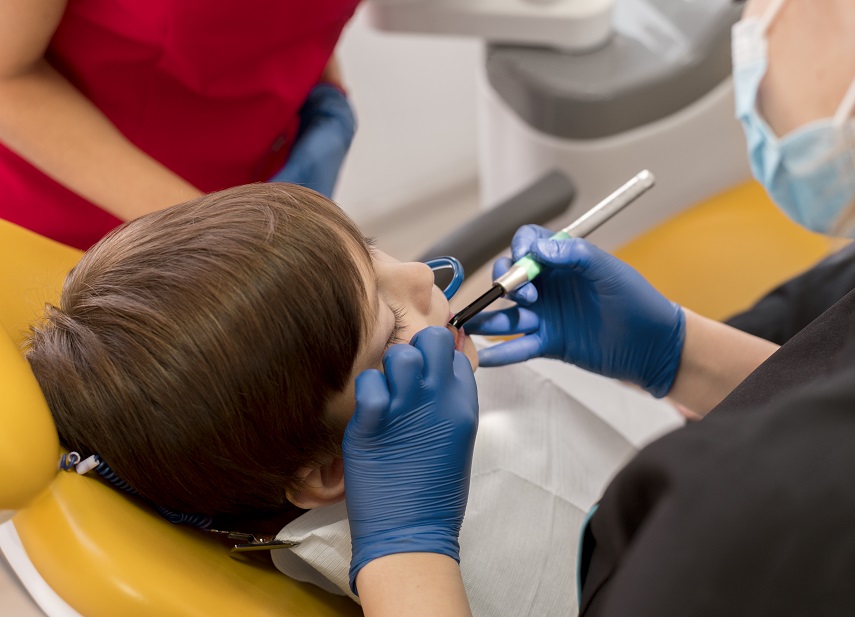
The first visit is usually much simpler and shorter than many parents imagine. Generally, it includes:
- A visual exam of the mouth, gums, and any teeth that have already come in, looking for early signs of cavities or developmental issues.
- An assessment of habits, such as bottle use, pacifier use, or thumb-sucking, which can affect dental and jaw development.
- Guidance for parents on age-appropriate oral hygiene and when to start brushing the child’s teeth.
- Answers to questions about tooth eruption, fluoride use, and diet.
- In most cases, no procedure is performed; the goal is simply to familiarize the child with the dental office.
This first visit is also a chance for the child to associate the dental office with a calm, pain-free experience — something that directly shapes how they react to future visits.
Why shouldn’t you wait longer?
It’s common for parents to postpone the first visit, thinking “they’re just baby teeth, they’ll fall out anyway.” But baby teeth guide the position of permanent teeth and support speech and chewing development. An untreated cavity in a baby tooth can affect the health of the permanent tooth coming in behind it.
What’s more, when the first visit only happens once there’s already an obvious problem — pain, a visible dark spot, swelling — the experience tends to be more stressful for both the child and the parents, and the necessary treatment can end up being more complex than if it had been caught early.
According to Clínica Fernando Sandoval, it’s best not to wait for a warning sign before scheduling that first visit. An early appointment isn’t just a check-up — it’s also the first step in building the trust in dental care that will stay with the child for life.
Tips for a good first appointment
- Talk about the dentist naturally and positively, avoiding phrases that create fear (“it won’t hurt,” “they’re not going to do anything bad to you”).
- Schedule the appointment at a time when the child isn’t tired or hungry.
- Avoid passing on your own anxiety, if you have any — children are very sensitive to adults’ tone.
- Bring a favorite toy so they feel more comfortable in a new environment.
According to Clínica Fernando Sandoval, parents who approach the first visit with a calm attitude tend to notice their children adapt much faster to future appointments, even once actual treatment is needed.
Frequently Asked Questions
What is the recommended age for the first dental visit?
It’s recommended around the child’s first birthday, or within six months of the first tooth appearing, whichever comes first.
Do I need to wait until all the baby teeth have come in?
No. The first visit can and should happen well before baby teeth finish coming in, precisely so any issue can be caught early.
What if my child still doesn’t have teeth at 6 months?
There’s no urgency in that case, but an early orientation visit can be useful if you have questions about breastfeeding, pacifier use, or preventive care before teeth erupt.
Does the first appointment include any treatment?
In most cases, no. The first visit focuses on examination, parent guidance, and helping the child get familiar with the office.
Where can I take my child for their first dental appointment in Quito or Cumbayá?
Clínica Odontológica Fernando Sandoval offers pediatric dentistry at both of its locations, Quito and Cumbayá.
Conclusion
The first dental visit doesn’t have to be a source of anxiety, for either parents or children. Scheduling it within six months of the first tooth, or by the child’s first birthday, isn’t an overreaction — it’s the simplest way to prevent problems before they exist, and to help your child grow up seeing the dental office as a familiar, safe place, not somewhere they only go when something hurts.