Professional dental cleaning: Why it is key to a healthy smile and how to know if you need it?
Professional dental cleaning is one of the most important preventive treatments in oral health care. Although many people believe that “if I brush well, I don’t need a cleaning,” the reality is different: brushing and flossing play a vital role, but they cannot remove hardened tartar or reach deep areas where bacteria accumulate.
At Clínica Odontológica Fernando Sandoval, we have highly trained specialists and modern technology that allow us to perform professional dental cleanings safely, comfortably, and effectively.
What is a professional dental cleaning?
A professional dental cleaning, also called prophylaxis, is a clinical procedure designed to remove:
- Bacterial plaque
- Tartar (dental calculus)
- Superficial stains
- Bacteria accumulated below the gumline
A professional cleaning is not only preventive; it also helps maintain and improve gum health, reduces inflammation, and leaves teeth brighter and smoother.
Why isn’t brushing and flossing enough?
Even with impeccable hygiene, there are areas that simply cannot be 100% cleaned at home:
- Between back molars
- Below the gumline
- Behind the lower front teeth
- Areas where teeth are very close together
- Around old fillings or crowns
In these areas, calculus forms—hardened tartar that requires professional instruments to remove. Additionally:
- Tartar is porous → it retains bacteria.
- Bacteria → inflame gums and cause bad breath.
- Inflammation → causes bone loss.
- Bone loss → leads to mobility or tooth loss.
This is why professional cleaning is essential even in mouths without cavities.
Types of professional dental cleaning
1. Basic cleaning (prophylaxis)
This is the most common cleaning. It consists of removing plaque and superficial tartar, polishing the teeth, and reinforcing hygiene.
Ideal for:
- healthy adults
- patients without periodontal disease
- maintenance every 6 months
2. Deep cleaning (scaling and root planing)
Performed when there is severe gingivitis or periodontitis. It is more detailed because tartar accumulated below the gumline is removed.
Ideal for:
- bleeding gums
- abundant tartar
- early tooth mobility
- diagnosed periodontitis
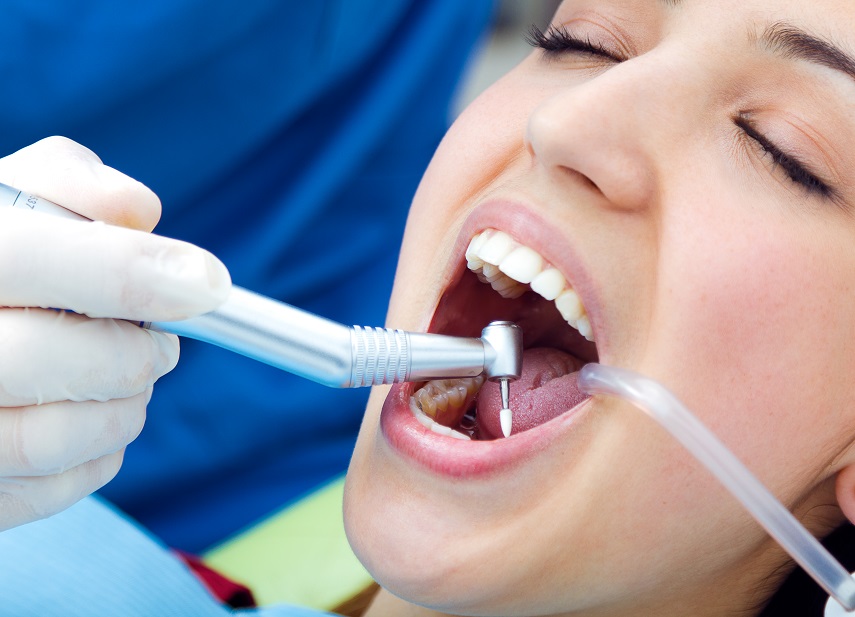
3. Ultrasonic cleaning
Uses a device that emits vibrations to detach tartar without pain.
Benefits:
- faster
- less invasive
- very effective on stubborn tartar
- comfortable for children and older adults
4. Dental polishing
Removes stains from coffee, tea, wine, tobacco, and pigmented foods.
Leaves teeth brighter and reduces bacterial adhesion.
Benefits of getting a professional dental cleaning
1. Prevents cavities
Cavities begin when bacteria produce acids that weaken enamel.
Cleaning removes those bacteria before they can cause damage.
2. Prevents bleeding and gum disease
Bleeding is NOT normal.
A proper cleaning reduces inflammation, fights gingivitis, and protects bone.
3. Reduces bad breath (halitosis)
Accumulated tartar is one of the main causes of bad breath.
A deep cleaning removes it completely.
4. Improves smile aesthetics
Teeth regain their natural shine and superficial stains are removed.
5. Prevents tooth loss
Periodontal disease is the #1 cause of tooth loss in adults.
Cleaning prevents its progression.
6. Saves money on complex treatments
A simple cleaning can prevent:
- root canals
- periodontal surgeries
- crowns
- implants
Prevention is ALWAYS more economical.
How often should you get a cleaning?
International recommendation (ADA):
Healthy adults
Every 6 months.
Patients with gingivitis or abundant tartar
Every 3–4 months.
Children
Every 6 months, especially between ages 6–12.
Patients with orthodontics
Every 3 months (more accumulation).
Diabetics or immunocompromised patients
Every 3–4 months (higher risk).
Signs you need an urgent cleaning
If you have any of the following symptoms, schedule an appointment as soon as possible:
- Bleeding when brushing
- Red, swollen, or receding gums
- Persistent bad breath
- Visible tartar between teeth
- Sensitivity to cold or heat
- Stains on teeth
- “Roughness” feeling when running your tongue over teeth
- Mild tooth mobility
- Gums that hurt or feel uncomfortable
Most of these symptoms are signs of gingivitis or early periodontitis.
What happens if you don’t get dental cleanings?
Risks include:
- deep cavities
- infections
- gum and bone loss
- tooth mobility
- advanced periodontitis
- chronic bad breath
- wear and fractures
- higher risk of systemic diseases
Recent studies show a strong connection between periodontal disease and:
- diabetes
- heart disease
- premature births
- respiratory diseases
Taking care of your oral health means taking care of your overall health.
Step by step: What is a professional cleaning like in our clinic?
- Initial evaluation
Complete review of teeth, gums, and tissues. - Tartar removal
Manual instruments and ultrasonic technology are used. - Interdental cleaning
Removal of plaque between teeth and additional checks. - Dental polishing
Removes stains and leaves teeth smooth and shiny. - Final review and recommendations
Personalized hygiene guidance according to the patient’s condition.
Dental cleaning for children
In children, dental cleaning not only prevents cavities but also strengthens healthy habits.
Benefits:
- lower incidence of early cavities
- reduced fear of the dentist
- strengthened enamel
- early detection of problems
From the first tooth, a child may already need preventive dental care.
Frequently Asked Questions
Does dental cleaning hurt?
No, especially when modern ultrasonic devices are used. In cases of sensitivity, topical anesthesia can be applied.
How long does a cleaning take?
Between 30 and 45 minutes, depending on the amount of tartar.
Is it safe for children and pregnant women?
Yes, completely safe and recommended.
Do teeth get whiter?
Yes, but it does not replace professional whitening.
Can I eat after the cleaning?
Yes, although it’s recommended to wait 30 minutes if fluoride was applied.
Conclusion
Professional dental cleaning is not a luxury or an aesthetic procedure: it is an essential need to prevent disease, maintain a healthy smile, and avoid major complications.
At Clínica Odontológica Fernando Sandoval, we perform careful, safe, and personalized cleanings using modern equipment and a patient-centered approach